



Doctor Reputation Management: HIPAA Review Automation Guide


📋Table of Contents:
- The Psychology of Medical Reviews (And Why You Need Automation)
- Architecting the Post-Appointment SMS Workflow
- Navigating HIPAA When Responding to Reviews
- The Protocol for Neutralizing Negative Reviews
- Google Maps Correlation: Why Reviews Drive SEO
- Review Syndication and Rich Snippets
- Internal Feedback Loops: Preventing Bad Reviews
- The Financial Value of a 5-Star Reputation
- Comparative Data & Practice Metrics
- Frequently Asked Questions
The Psychology of Medical Reviews (And Why You Need Automation)
The fundamental flaw in organic reputation management is the 'Motivation Gap.' A patient who experiences a minor billing error is highly emotionally motivated to post a 1-star review to enact 'revenge' or seek resolution. Conversely, a patient whose routine cleaning or surgical consult went perfectly fine feels satisfied, but lacks the emotional spike required to proactively log into Google and leave a 5-star review.
To counter this, you must actively bridge the gap by making the review process frictionless for the silent, satisfied majority. This cannot be left to human intervention; front-desk staff are too busy checking patients in and out to consistently ask for reviews. Automation is the only scalable solution. By integrating reputation software directly with your EHR, you remove the human bottleneck and guarantee that every eligible patient receives a polite, strategically timed prompt.
Architecting the Post-Appointment SMS Workflow
Timing is the most critical variable in review automation. If you ask too early, the patient is still driving home; if you ask a week later, the emotional resonance of their positive experience has faded. Our data shows the optimal window for requesting a medical review is via SMS precisely 2 to 4 hours post-appointment.
The workflow should be conditional based on the appointment type. For a high-anxiety procedure (e.g., wisdom teeth extraction), the immediate SMS should be a clinical check-in ('How are you feeling? Reply YES if bleeding has stopped'), with the actual review request delayed until the 48-hour follow-up. For standard consults, the SMS should be direct and hyper-linked: 'Hi [Name], Dr. Smith loved seeing you today! Your feedback helps us grow. Could you tap here to leave a quick 5-star review? [Google Link]'.
Navigating HIPAA When Responding to Reviews
When a patient leaves a review, they are publicly disclosing their own health information. However, the moment a clinic responds and confirms that the reviewer is a patient, the clinic has potentially committed a HIPAA violation, especially if clinical details are mentioned. You cannot say, 'We are glad your knee surgery went well!' even if the patient explicitly wrote about their knee surgery.
Every response must adhere to strict, pre-approved templates that acknowledge the feedback without validating the patient's identity or medical history. A compliant positive response looks like: 'Thank you for the kind words! We strive to provide excellent care to everyone who visits our clinic.' This addresses the review without confirming the individual's specific medical relationship.
The Protocol for Neutralizing Negative Reviews
Negative reviews are inevitable, whether due to long wait times, billing confusion, or unrealistic clinical expectations. The goal of responding to a 1-star review is not to win an argument with the angry patient; it is to demonstrate professionalism to the hundreds of prospective patients reading the interaction.
The HIPAA-compliant protocol for negative reviews is the 'Acknowledge and Offline' strategy. Template: 'We take all feedback seriously and hold our practice to the highest standards. Due to federal privacy regulations, we cannot discuss specific circumstances online. Please contact our Practice Manager directly at [Phone Number] so we can investigate and resolve your concerns.' This shows accountability while safely moving the conflict out of the public domain.
Google Maps Correlation: Why Reviews Drive SEO
Reviews are not just a conversion tool; they are a primary algorithmic ranking factor for the Google Maps 3-Pack. Google's local algorithm looks for three things in reviews: Quantity, Velocity, and Keywords. A clinic with 500 reviews gathered over five years will often be outranked by a clinic with 200 reviews generated consistently over the last six months (Velocity).
Furthermore, Google utilizes Natural Language Processing (NLP) to read the content of the reviews. If your automated prompt gently encourages patients to mention their procedure ('If you have a moment, please mention how your Invisalign treatment went!'), Google associates those keywords with your Google Business Profile, heavily boosting your ranking for 'Invisalign near me' searches.
Review Syndication and Rich Snippets
To maximize the SEO impact of your reputation, your reviews should not live solely on Google. Utilize review management software to aggregate and syndicate your first-party reviews (reviews left directly on your system) and third-party reviews (Google, Healthgrades) directly onto your website.
By injecting these syndicated reviews into your website's HTML using `AggregateRating` schema markup, you allow Google to display gold review stars directly beneath your organic search listings (Rich Snippets). A search result with bright orange stars commands a significantly higher Click-Through Rate (CTR) than a standard text listing, driving more traffic to your site without any additional SEO effort.
Internal Feedback Loops: Preventing Bad Reviews
The ultimate reputation management strategy is operational excellence. Advanced automation systems use 'Review Gating' logic (where permitted by platform terms of service) or internal surveys to catch dissatisfied patients before they vent publicly. If a patient scores their visit a 2 out of 10 on an internal SMS survey, they are immediately routed to a private feedback form that alerts the clinic manager, rather than being linked to Google.
This provides the practice manager an opportunity for service recovery. Calling an upset patient immediately to resolve a billing error can often turn a guaranteed 1-star review into a loyal, long-term patient.
The Financial Value of a 5-Star Reputation
A dominant online reputation dramatically lowers patient acquisition costs. Clinics with a 4.8+ rating and high review velocity convert Google Ads traffic at a significantly higher rate than their 3.5-star competitors, meaning they pay less for every booked appointment. In 2026, your reputation is your most powerful marketing asset; managing it must be treated with the same precision and automation as your clinical operations.
🖼️Clinical Visual Assets & Case Gallery:



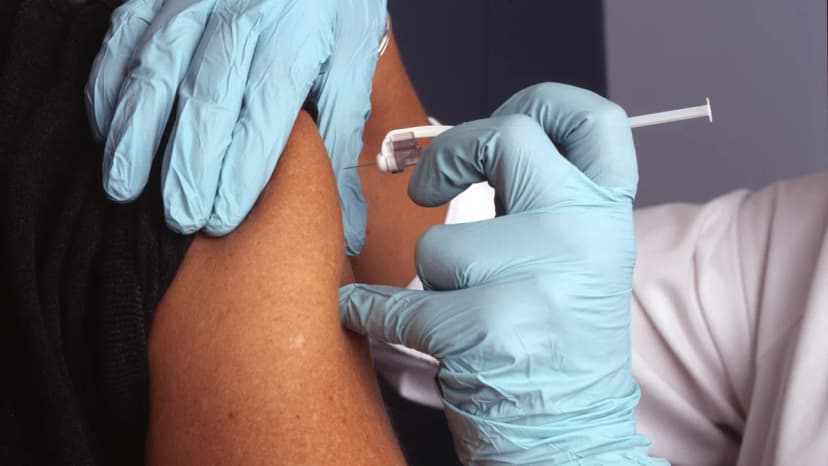

HIPAA-Compliant Review Response Templates
| Review Type | Patient Sentiment | Compliant Response Template | Key Rule |
|---|---|---|---|
| 5-Star | Praising specific doctor | 'Thank you! Our entire team is dedicated to providing compassionate care.' | Do not confirm patient identity |
| 1-Star | Angry about wait time | 'We value your time and take scheduling feedback seriously. Please call management at [Number].' | Take it offline immediately |
| 1-Star | Complaining about clinical result | 'Due to privacy laws, we cannot discuss clinical details online. Please contact our office immediately.' | Never discuss medical facts publicly |
Review Automation Timing Matrix
| Appointment Type | Optimal SMS Send Time | Messaging Focus | Secondary Goal |
|---|---|---|---|
| Routine Checkup / Cleaning | 2-3 Hours Post-Visit | Quick, frictionless rating link | Drive Google Maps velocity |
| Surgical Procedure | 48-72 Hours Post-Visit | Focus on recovery and care quality | Detailed, keyword-rich testimonials |
| New Patient Consult | 24 Hours Post-Visit | Focus on staff friendliness & facility | Build initial trust markers |
Impact of Review Ratings on Conversion
| Average Google Rating | Perceived Trust Level | Estimated Ad Conversion Rate | Strategy Focus |
|---|---|---|---|
| 4.8 - 5.0 Stars | Elite / Highly Trusted | 8% - 12% | Maintain velocity & scale paid ads |
| 4.3 - 4.7 Stars | Good / Acceptable | 4% - 7% | Push automated volume to bury older negative reviews |
| Under 4.0 Stars | Warning / Distrusted | < 2% | Emergency internal operational audit & aggressive SMS campaigns |
Related Services & Recommended Guides:
Frequently Asked Questions
Is it legal to offer patients a discount in exchange for a 5-star review?
No. Offering incentives (gift cards, discounts) in exchange for reviews violates Google's Terms of Service and can result in your entire Google Business Profile being suspended. Furthermore, for practices accepting Medicare/Medicaid, it can violate federal anti-kickback statutes.
Can we ask Google to remove a fake 1-star review from a competitor?
You can 'Flag as Inappropriate' if the review violates Google's policies (e.g., hate speech, conflict of interest). However, Google rarely removes reviews just because the clinic claims the person isn't a patient. Your best defense is diluting the fake review with hundreds of real 5-star reviews.
Should doctors reply to reviews, or should the marketing team do it?
The marketing team or front desk should handle standard replies using strictly approved, HIPAA-compliant templates. Doctors should rarely reply directly, as they are more likely to accidentally disclose clinical details in an emotional defense of their work.
What is 'Review Gating' and is it allowed?
Review gating is the practice of asking a patient if their experience was good or bad, and only sending the good ones to Google while routing the bad ones internally. Google officially updated its policies to prohibit strict gating. Modern systems now ask for feedback universally, but prioritize resolving negative feedback rapidly.